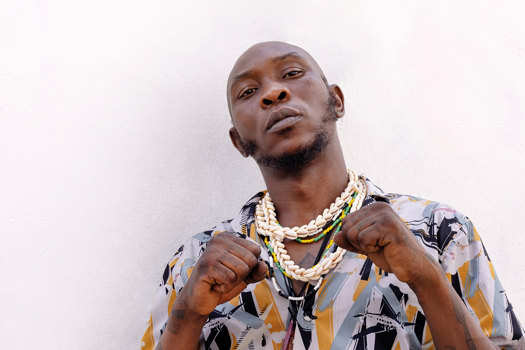
Seun Kuti says giving alms to beggars is delaying revolution in Nigeria, sparking mixed reactions over his controversial argument
Afrobeat musician Seun Kuti has argued that Nigeria’s culture of giving alms to street beggars is easing the hardship that could otherwise drive stronger demands for political and social change.
Kuti made the controversial remarks during an interview with ObjecTV, where he suggested that regular financial assistance from members of the public was reducing the desperation among beggars that, in his view, could fuel a wider revolution in Nigeria.
“The beggars are the ones who are supposed to be angry in order to cause revolution, but since we give them money from time to time, they are not hungry enough to be angry,” Kuti said.
The musician’s argument places everyday acts of charity within a much broader debate about poverty, inequality and political accountability in Nigeria.
Kuti has for years been an outspoken advocate of revolutionary change, frequently criticising Nigeria’s political leadership and describing the country’s political class as corrupt.
His latest comments, however, have prompted mixed reactions, particularly over the suggestion that Nigerians should stop giving money to vulnerable people in order to create conditions for political upheaval.
Some reactions questioned the logic of linking almsgiving directly to revolutionary activity, arguing that refusing assistance to people living in severe poverty would primarily expose vulnerable Nigerians to greater hardship.
Others viewed Kuti’s comments as a deliberately provocative way of drawing attention to the depth of economic hardship and the frustration experienced by millions of Nigerians.
The distinction is important because street begging is often linked to wider social and economic problems, including unemployment, displacement, disability, inadequate social protection and extreme poverty.
For many Nigerians who give money to beggars, the act is therefore less about politics than immediate compassion towards someone asking for help.
Kuti’s position reflects a different interpretation. His argument is that when hardship is repeatedly softened through informal assistance, the pressure that might compel citizens to demand fundamental change can become less intense.
The idea fits into a longstanding strand of political thought that sees severe economic hardship as a potential catalyst for collective action.
But hardship alone does not automatically produce a revolution, and there is no established evidence that withholding alms would lead to meaningful political transformation.
Kuti’s comments have nevertheless reopened a familiar Nigerian conversation about the limits of individual charity in a country facing persistent poverty and concerns over governance.
The musician’s intervention also comes amid continuing public debate over how Nigerians should respond to economic difficulties and whether short-term relief can address the structural problems behind them.
For Kuti, the issue appears to be about more than street begging. It is part of his wider argument that Nigerians should confront the conditions producing poverty rather than becoming accustomed to managing its consequences.
The provocative nature of the remarks has ensured that the debate extends beyond whether people should give alms.
At its heart is a more difficult question about whether a society can rely on individual acts of kindness while leaving the deeper causes of poverty unresolved.