President Tinubu calls on ECOWAS to urgently activate the regional standby force to combat terrorism, warning against further delays amid rising insecurity
President Bola Ahmed Tinubu has called on West African leaders to immediately activate the long-delayed ECOWAS Standby Force, warning that continued delays pose a threat to regional peace and security.
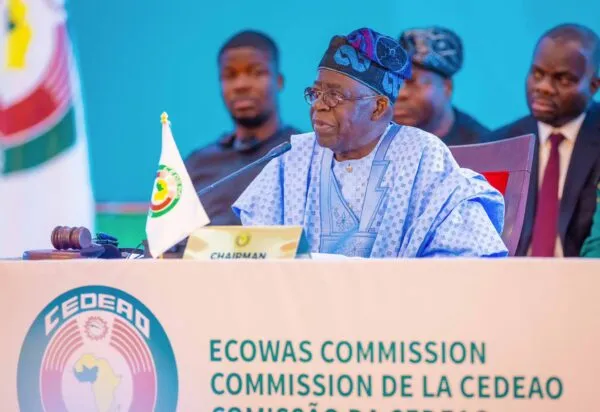
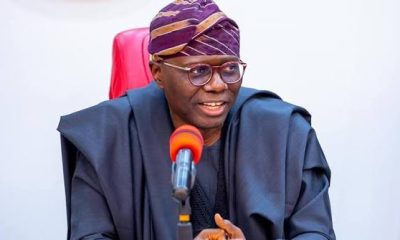
Speaking in Abuja at the 67th Ordinary Session of the ECOWAS Authority of Heads of State and Government, Tinubu said the region must move “from concept to operational reality” in its fight against terrorism and transnational threats.
This was one of Tinubu’s final official acts as chairman of the 15-member bloc, marking the end of a year-long tenure during which he emphasised diplomacy, security, and integration.
“The ECOWAS Standby Force must move from concept to operational reality. I am a little bit worried about the slow pace of its activation, which is taking longer than desired,” Tinubu told fellow leaders.
He warned that violent networks operating across borders respect no nation’s sovereignty and called for stronger coordination and political will to ensure collective security.
“Threats confronting the region are transnational, driven by agile and dangerous networks that respect nobody’s borders. No single nation can, therefore, address these challenges alone.”
Tinubu noted that during his tenure, ECOWAS completed the Military Logistics Depot in Lungi, Sierra Leone, a key strategic installation intended to support future regional deployments with equipment and supplies.
“With the depot’s completion, Nigeria is committing itself to sea-lift and air-lift arrangements with ECOWAS,” he said, referencing Nigeria’s recent agreement with the African Union in Addis Ababa.
The ECOWAS Standby Force must move from concept to operational reality. I’m worried about the slow pace of its activation.
The Nigerian president also expressed optimism that suspended member states — Burkina Faso, Mali, and Niger — will soon return to the fold, despite their withdrawal from ECOWAS following military coups.
“Under my chairmanship, I deployed all diplomatic means to engage and dialogue with our brothers in Burkina Faso, Mali, and Niger. I am confident that before too long, they may return to the family.”
On the economic front, Tinubu decried the region’s persistently low levels of intra-regional trade, calling for an enabling environment for private enterprise, and the removal of trade barriers.
“We must create the conditions necessary for innovation to flourish and empower the private sector to unlock the region’s economic potential.”
He urged leaders to expedite work on major infrastructure projects including the West African Gas Pipeline, the West African Power Pool, and the Abidjan–Lagos Corridor Highway, which he said would accelerate development and integration across member states.
The News Agency of Nigeria (NAN) reports that presidents in attendance included Julius Maada Bio (Sierra Leone), who succeeded Tinubu as ECOWAS chairman, as well as Joseph Boakai (Liberia), Bassirou Diomaye Faye (Senegal), John Mahama (Ghana), Adama Barrow (The Gambia), Patrice Talon (Benin), and Jean Lucien de Tové (Togo).
The session closed with renewed commitments to collective security, diplomacy, and economic cooperation, even as the bloc continues to navigate a challenging political and security landscape.