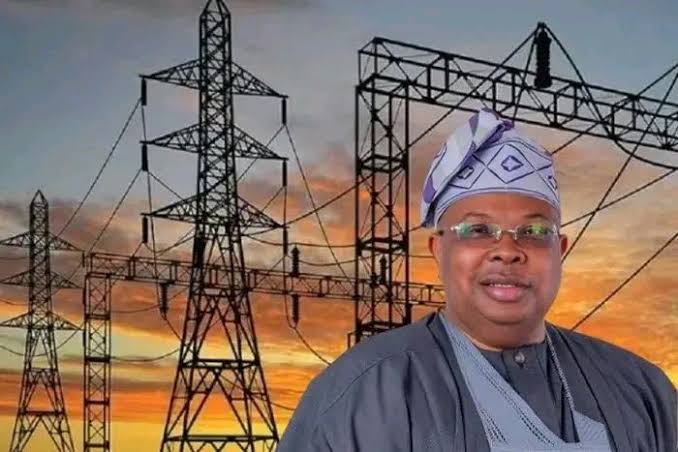
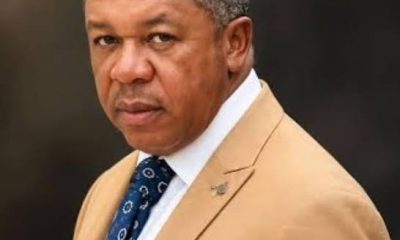
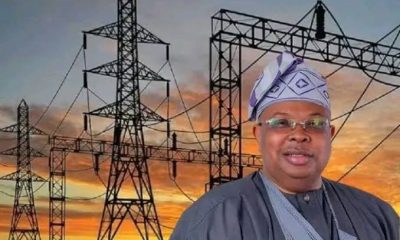
Tegbe power crisis claims face scrutiny as Nigerians report persistent blackouts despite government assurances of restored electricity supply
Nigeria’s Minister of Power, Joseph Tegbe, has declared that recent electricity supply challenges affecting parts of the country have been resolved, even as several households and businesses continue to grapple with prolonged outages and unreliable power supply.
Tegbe gave the assurance on Monday, November 9, 2026, during an appearance on a TVC television programme, where he said the government had addressed the immediate challenges and was working to maintain stability across the national grid.
The minister attributed the recent disruptions to planned maintenance at Egbin Power Station, gas supply constraints and the reported sabotage of electricity transmission lines.
He had earlier explained on November 7 that the combination of these challenges had reduced the volume of electricity available for distribution to consumers in affected areas, including Lagos and the Federal Capital Territory.
According to Tegbe, the planned maintenance at Egbin Power Station has now been completed, while the government is working to address other factors affecting electricity generation and transmission.
“Number one, we’ve sorted out this ‘little’ challenge we had in the last few days. It was painful for most of you. But look, we fixed it. And we will ensure that that stability remains. My focus is to ensure grid stability,” he said.
However, the minister’s assurance has come against the backdrop of continuing complaints from residents who say electricity supply remains inconsistent in several communities.
While some areas have reportedly experienced improvements, others continue to face outages, raising questions about the extent to which the disruptions have been resolved.
Addressing the situation in Lagos, Tegbe said electricity had returned to several locations following personal checks he conducted on Sunday night.
“I’m sure in Lagos, I confirm as at last night because I made personal calls, Ajah, Lekki, Ikoyi, Magodo, Ikeja, lights are back,” he said.
The minister added that some residents had confirmed the restoration through messages sent to him.
He appealed to Nigerians to remain patient while the government continued efforts to improve electricity supply.
“Nigerians, again, I appeal to you, just bear with us, we’ll get there,” he said.
Beyond the immediate disruptions, Tegbe projected that Nigeria could achieve more stable electricity supply within the next three to five years, provided ongoing infrastructure improvements and capacity expansion efforts were successfully implemented.
He acknowledged that resolving the country’s electricity challenges would require more than addressing temporary disruptions, stressing the importance of expanding infrastructure to accommodate growing demand.
“Honestly speaking, you already see some visible improvement despite the challenge we have had. By the time we fix the grid, I’ll look at the horizon of about three to five years from now,” he said.
The minister noted that electricity demand was increasing as more Nigerians worked remotely and businesses relied increasingly on digital services, artificial intelligence and data infrastructure.
He argued that the country’s electricity network must develop sufficient capacity to support these changes and sustain economic growth.
As part of the longer-term strategy, Tegbe disclosed that the Federal Government was planning a $2bn investment in an east-west super grid designed to strengthen electricity transmission and increase the national grid’s capacity.
The proposed infrastructure would complement the existing transmission network rather than replace it.
According to the minister, the project would connect several locations across the country, including Funtua, Gwagwalada, Ikot Ekpene, Benin, Epe and Ilorin.
He said the government had commenced the procurement process and that the project could be completed within two years.
Tegbe explained that the proposed investment was expected to increase the grid’s transmission capacity from approximately 4,000 megawatts to 19,000 megawatts.
The government also expects private sector participation in electricity transmission within the next two to three years as part of efforts to strengthen the sector.
The proposed super grid represents an ambitious infrastructure intervention, particularly given the longstanding challenges facing Nigeria’s electricity transmission network.
However, its eventual impact will depend on funding arrangements, procurement transparency, timely construction and coordination with electricity generation and distribution companies.
Nigeria’s electricity challenges have persisted for decades, with inadequate generation capacity, ageing transmission infrastructure, gas supply difficulties and distribution constraints contributing to unreliable supply.
Even when sufficient electricity is generated, limitations in transmission and distribution infrastructure can prevent power from reaching households and businesses.
For many Nigerians, the immediate concern remains less about future megawatts and more about getting reliable electricity today.
Small businesses, manufacturers, households and remote workers continue to bear the economic consequences of unstable supply, often relying on petrol and diesel generators to meet their electricity needs.
Such dependence increases operating expenses and places additional financial pressure on households already dealing with rising living costs.
Tegbe said the government’s immediate priority was to optimise existing electricity infrastructure while pursuing investments that would improve the resilience of the national grid.
He acknowledged the difficulties caused by inadequate electricity and appealed for public patience as the administration worked towards its targets.
While the minister’s assurance offers some hope of improvement following the recent disruptions, the experience of consumers across affected communities will ultimately determine whether the government’s declaration of a resolved crisis translates into a meaningful and sustained improvement in electricity supply.
Tags
Featured,Joseph Tegbe, Nigeria Power Crisis, Electricity Supply, National Grid, Egbin Power Station
Category: Business
Subcategory: Energy and Power
Alternative category: News / Infrastructure
Editorial note: The minister’s claim that the immediate crisis has been resolved should remain clearly attributed to him. The $2bn super grid and projected increase to 19,000MW are government plans, not completed achievements. Also, the 19,000MW figure should be described as proposed grid capacity, not guaranteed electricity delivered to consumers.