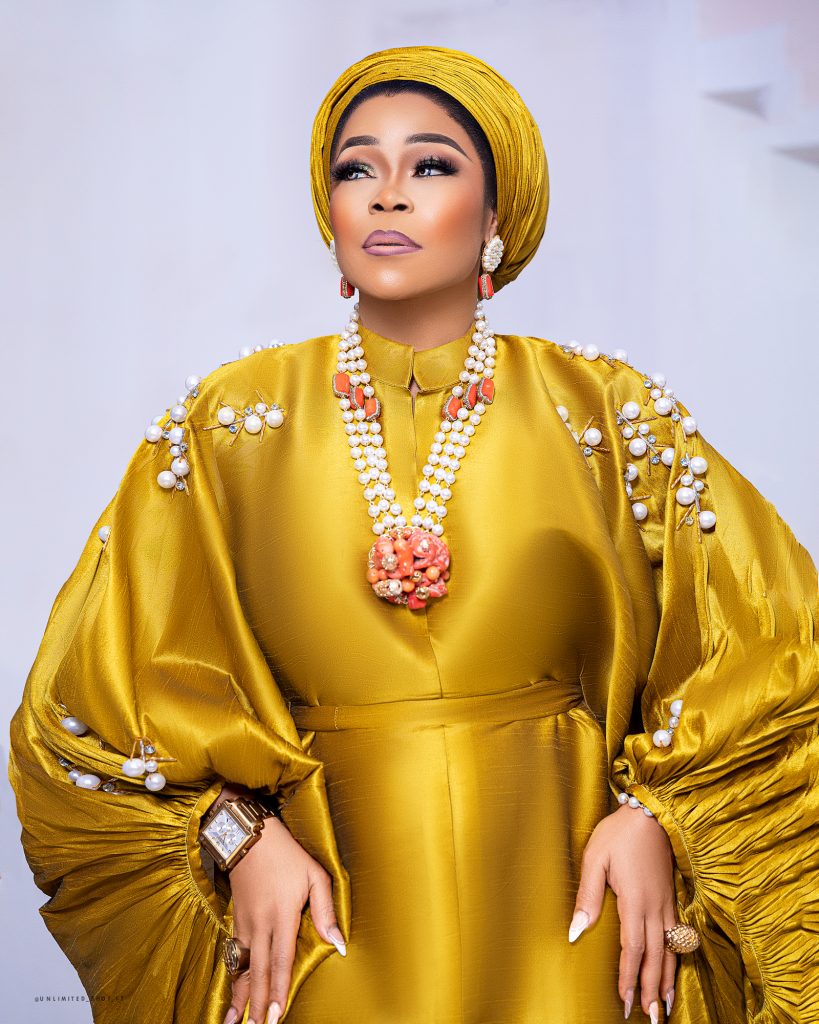
Shaffy Bello respect message urges younger Nigerians to honour elders, as the actress explains why she dislikes casual greetings and first-name address
Veteran Nollywood actress Shaffy Bello has renewed attention around the importance of respect for elders, saying younger people should be mindful of how they address older adults and should not casually use first names or greetings such as “Hi”.
Bello made the remarks during an appearance on Stephanie Coker-Aderinokun’s Me, Her & Everything Else podcast, where the actress discussed respect, relationships and personal growth. The episode, titled What I Know Ft Shaffy Bello, was published in November 2023.
Although the comments are not new, they have resurfaced as conversations about generational etiquette and changing social norms continue to attract attention.
Bello explained that she still encounters younger people who greet her with “Hi Shaffy” or address her simply by her first name.
Rather than viewing every instance as deliberate disrespect, Bello acknowledged that upbringing and cultural background can influence how people interact with older adults.
“Of course I still get it, I get the ‘Hi Shaffy’, and usually for me I know that upbringing matters and I also know that where you’re from also dictates some of the things that you do,” Bello said.
The actress said she would rather be addressed as “Ma’am”, arguing that age and experience should carry a degree of social recognition.
Bello described her response when a younger person calls her by her first name.
She said she does not necessarily react with hostility, but instead pulls the person aside and explains her position.
“Usually my response is simple and I say it with love,” Bello said, before explaining that she tells the person, “you haven’t earned the right to call me by my name”.
Bello also linked her position to cultural differences in Nigeria and beyond.
She pointed to the way some Nigerian communities use familial titles such as “aunty” when addressing older people, while noting that “ma’am” and “sir” remain common forms of respectful address in the United States.
Her comments therefore go beyond a personal preference. They reflect a wider debate about whether traditional forms of deference should remain central to everyday communication as younger generations adopt increasingly informal language.
For Bello, the answer appears clear. Familiarity should not automatically erase the distinction between generations.
The actress was particularly emphatic about the greeting “Hi”, which she said she finds difficult to accept when directed at her by younger people.
“I can’t stand it when people greet me with a ‘Hi’ and wave at me,” Bello said, describing the habit as something that “irks” her.
Bello’s position has previously drawn a mixture of reactions.
Some commentators have supported her argument that respect for elders remains an important African value, while others have viewed the issue through the lens of changing social expectations and generational differences. Legit.ng’s 2023 report on the discussion also featured a contrasting perspective from Mojisola Olaoye, who argued that respect should be taught to children from home.
The debate is also shaped by the fact that forms of respectful address differ significantly across Nigeria.
What one family or ethnic community regards as appropriately polite may be considered unnecessarily formal elsewhere.
Bello herself recognised that distinction, saying that upbringing and where a person comes from can influence their approach to greetings and titles.
The actress has continued to build a career that extends beyond acting. She has appeared in productions including Tinsel, Chief Daddy, Elesin Oba: The King’s Horseman and Shanty Town, while also developing a mentorship platform focused on sharing lessons from her career and personal experience.
That background adds context to her comments. Bello is not simply speaking as an older member of the public, but as an established figure who has spent decades in the Nigerian entertainment industry and has also positioned herself as a mentor to younger creatives.
Her message ultimately centres on a simple principle: modern communication does not necessarily have to come at the expense of courtesy.
For Bello, calling an elder by a familiar first name may appear harmless in an increasingly informal society, but the choice of words can still carry cultural meaning.
Her candid remarks have consequently reopened a powerful conversation about what respect should look like in contemporary Nigeria, and whether traditional etiquette can coexist with the more relaxed communication style of younger generations.