Israel DMW Davido ban dispute intensifies after Monday Okpebholo’s aide announced restrictions on the singer’s performances in Edo State
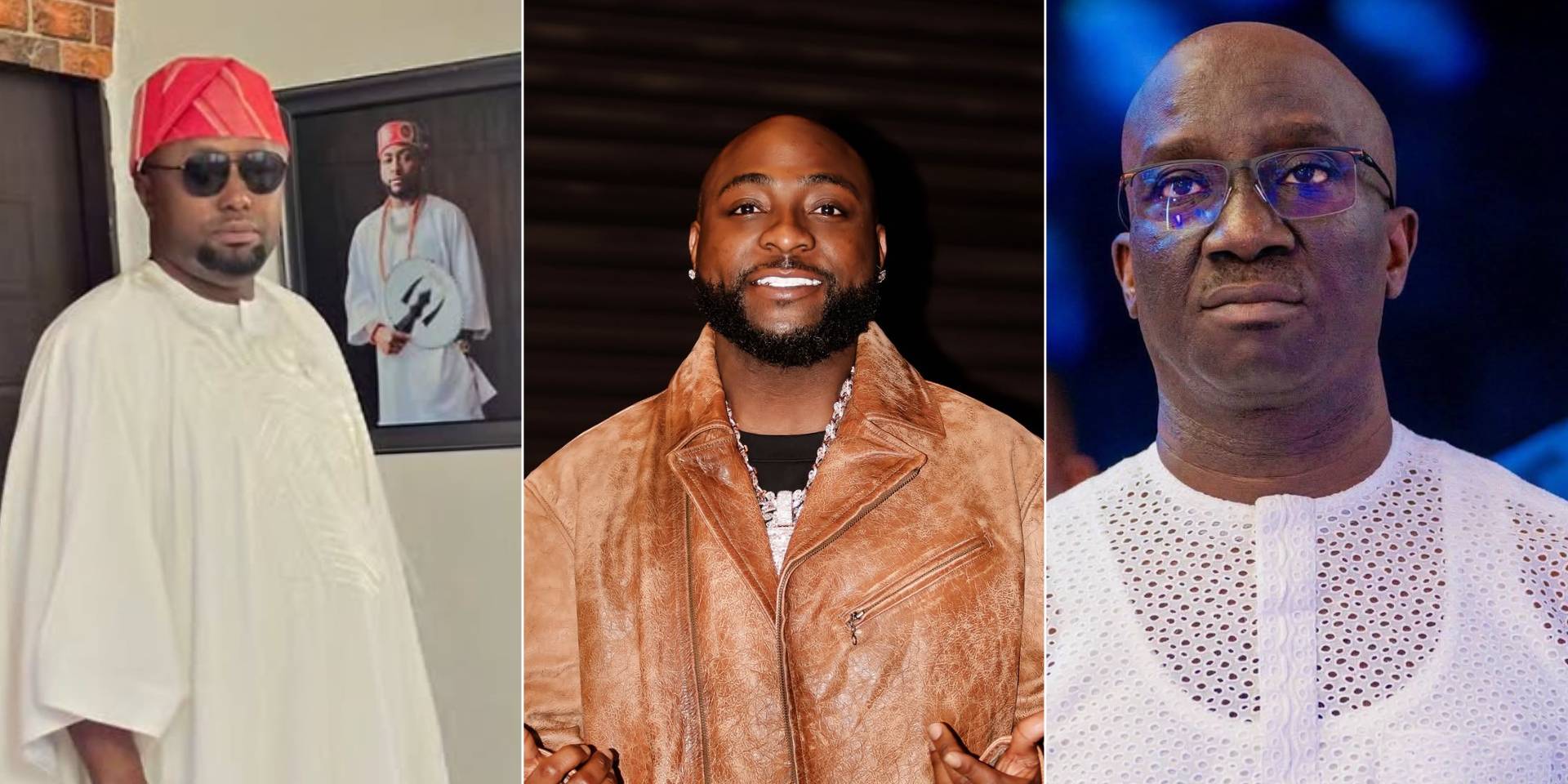
Israel DMW, logistics manager to Nigerian music star David Adeleke, popularly known as Davido, rejected an announced ban on the singer in Edo State and said nobody could prevent his principal from visiting or performing in the state.
The reaction followed a video statement by Apostle Kassy Chukwu, Senior Special Assistant to Edo State Governor Monday Okpebholo on Digital Media, announcing that Davido had been barred from performing in Edo.
The directive was linked to an online confrontation between Davido and Governor Okpebholo during the recently concluded Osun State governorship election.
The exchange added a fresh political dimension to an already heated relationship between the singer and the governor.
Israel DMW, who is from Edo State, responded angrily to the announcement. In a post shared on Instagram, he questioned the authority of the governor’s aide to speak on behalf of Edo residents and argued that Davido has a personal connection to the state through his mother.
“HE’S NOT SPEAKING FOR WE EDOLITES. NO MAN ON THIS PLANET EARTH CAN BAN OGA FROM EDO, HIS MATERNAL HOME,” Israel wrote.
Israel also attacked Apostle Kassy Chukwu’s background and described him as a “settler” from Ebonyi State. The comments were accompanied by several personal insults directed at the governor’s aide.
The language used in the response has intensified what might otherwise have remained a political disagreement between two public figures. Israel’s intervention effectively turned the dispute into a broader argument about identity, belonging and who has the authority to speak for Edo residents.
The immediate controversy stems from the Osun governorship election, where Davido became involved in a public disagreement with Okpebholo. The singer had criticised aspects of the political process, while the governor subsequently responded to him online.
The dispute escalated before the announcement concerning Davido’s performances in Edo, making the timing of the directive particularly notable.
Davido has maintained a significant public profile in Nigerian politics and social affairs in recent years, although his interventions have frequently generated debate over the extent to which entertainers should become involved in political disputes.
Israel DMW’s relationship with Davido has also made him a particularly vocal defender of the singer. As Davido’s logistics manager and a prominent Edo indigene, his response carries a personal as well as professional dimension.
His reference to Davido’s maternal connection to Edo was central to his argument. Rather than treating the singer as an outsider who could simply be excluded from the state, Israel presented Davido as someone with family roots in Edo.
The governor’s camp, however, has not suggested that Davido’s family background is the basis of the directive. The stated issue is his public confrontation with Okpebholo during the Osun election.
The dispute therefore raises a broader question about the limits of political authority over entertainers and public performances.
Whether a state government can effectively prevent a nationally prominent artist from appearing in a state would depend on the legal and administrative basis for any restriction, rather than solely on a political disagreement.
For now, the public statements have produced more heat than clarity. The governor’s aide has announced the restriction, while Israel DMW has emphatically rejected it and vowed that Davido cannot be prevented from coming to Edo.
The dispute is likely to attract further attention because it brings together entertainment, regional identity and partisan politics at a particularly sensitive time in Nigeria’s political calendar.
What began as an online exchange surrounding the Osun election has consequently developed into a sharp public confrontation over whether Davido can be barred from Edo and who has the authority to make such a decision.