HaloBraid unveils its braid-assist device, promising faster hair braiding and reduced physical strain for professional stylists
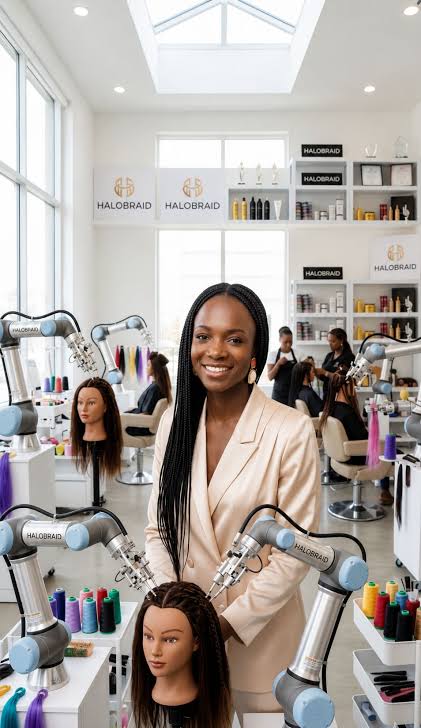
Nigerian-American engineer and entrepreneur Yinka Ogunbiyi has unveiled the first public demonstration of HaloBraid, a robotic hair-braiding assistance device designed to speed up salon appointments and reduce the physical demands placed on professional stylists.
The demonstration, shared on social media on October 30, 2026, showed the machine performing the repetitive weaving motion involved in creating individual braids.
The startup says the technology could help professional braiders complete individual braids up to five times faster, potentially increasing salon capacity while maintaining consistency.
HaloBraid was conceived during the COVID-19 lockdown in 2020, when Ogunbiyi spent four days braiding her own hair.
The experience exposed the time and physical effort required for traditional hairstyles and inspired her to explore a mechanical solution.
She subsequently partnered with co-founder David Afolabi to develop the technology.
The engineering team reportedly produced more than 600 prototypes and filed 12 patents during the development process.
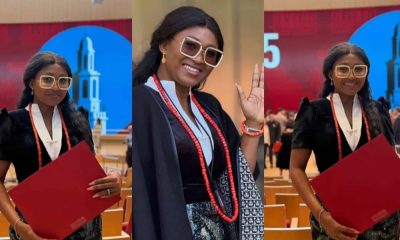
Ogunbiyi moved to the United States to pursue joint master’s degrees at Harvard Business School and Harvard John A. Paulson School of Engineering and Applied Sciences. The company also used pitch competitions to support its early development.
The startup gained further momentum in July 2026 after securing a $7m seed funding round led by Seven Seven Six, the venture capital firm founded by Reddit co-founder Alexis Ohanian.
HaloBraid says it has attracted a commercial waiting list of more than 7,000 salons.
Despite the attention surrounding its robotic technology, HaloBraid says its device is designed to assist human braiders rather than replace them.
Under the proposed workflow, stylists retain control over the creative and preparatory stages of the process. They section the hair, apply styling products and manually secure the root of each braid before feeding the strand into the machine.
HaloBraid then handles the repetitive weaving motion, after which the stylist completes and seals the ends.
This approach places the device between traditional manual braiding and fully automated hairdressing.
Rather than taking over the entire process, it is intended to reduce the repetitive hand movements that consume much of a braider’s time.
The company says the potential benefits extend beyond faster appointments. Long salon sessions can place considerable strain on stylists, particularly those who spend much of their working day performing repetitive movements with their hands and wrists.
Conditions such as carpal tunnel syndrome and repetitive strain injuries are among the occupational health concerns associated with repetitive manual work.
HaloBraid’s proposed assistance could help reduce some of these physical demands, although the extent of any health benefit would need to be established through practical use and independent assessment.
Ogunbiyi has framed the venture as an effort to give time back to women who spend long hours having their hair braided.
“I believe time is the ultimate luxury. And even though this has been harder than I could have ever imagined, it’s worth it for me. I want to save eight billion hours for Black women each year,” she said.
The public demonstration generated considerable interest among hairstylists, technology enthusiasts and potential customers, while also prompting debate about the place of automation in a culturally significant beauty practice.
Supporters welcomed the possibility of reducing physical strain on professional braiders, particularly older stylists, people with disabilities and workers experiencing reduced hand strength.
Some also suggested that shorter appointments could give braiders more time for family responsibilities and other work.
However, others questioned whether mechanical assistance could affect the artistry and personal touch associated with traditional braiding.
For many communities, hair braiding is more than a beauty service. It is a cultural practice shaped by generations of techniques, creativity and social connection.
Concerns about automation therefore extend beyond whether a machine can reproduce a particular weaving motion.
Practical questions have also emerged over the device’s compatibility with different hair textures, including natural kinky hair and mixed synthetic extensions. Potential buyers have raised concerns about maintenance requirements, reliability and the eventual retail price.
These questions could influence how quickly salons adopt the technology, particularly if the cost of acquiring and maintaining the equipment is high.
HaloBraid is preparing for a phased commercial rollout involving selected stylists.
The company’s reported waiting list suggests significant interest, but demand will ultimately depend on how well the device performs in everyday salon conditions.
The unveiling marks an important step in the development of technology for the beauty industry, where automation has traditionally received less attention than in manufacturing and other sectors.
For Ogunbiyi and her team, the challenge now is to demonstrate that robotic assistance can make braiding more efficient without diminishing the skill, creativity and cultural value that human stylists bring to the craft.