Femi Adebayo explains why he prostrates before Obas despite being Muslim, saying he distinguishes religious worship from Yoruba cultural respect
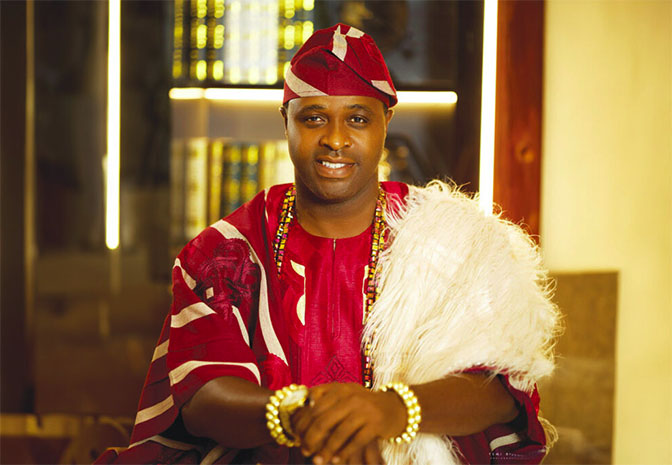
Nollywood actor and filmmaker Femi Adebayo has explained why he prostrates before Yoruba traditional rulers despite being a Muslim, saying he distinguishes between worshipping Allah and showing cultural respect to parents and monarchs.
Femi Adebayo addressed the subject during an appearance on the VJ Adams Live podcast, which was aired on YouTube on August 31, 2026.
The actor was discussing the sometimes complicated relationship between Islamic teachings and traditional Yoruba customs, particularly the practice of prostrating before elders and traditional rulers.
For Adebayo, the distinction comes down to intention and the status he gives to the person before whom he bows.
He explained that Islamic worship belongs exclusively to Allah, while prostration in a cultural setting can serve as an expression of respect rather than worship.
“Islam says your chest should touch the ground and your head should touch the ground only for your Almighty, which is Allah. And Yoruba says you should prostrate for your father,” he said.
Adebayo then described the personal reasoning he uses to reconcile the two traditions.
“Now I see my father and my mother as mini gods. I see the almighty as a super god. So I applied common sense. Okay, let me give the super one my chest and my head and let me just bow for the mini god,” he said.
The actor maintained that his intention is important when observing the customary greeting.
He said that when he visits a Yoruba palace where prostration is an established cultural practice, he does not necessarily view the gesture as a contradiction of his Islamic faith.
“If I go to a Yoruba land and I feel that okay, everybody prostrate, I believe my own God will permit me to prostrate at that time,” Adebayo explained.
He added that he would not refuse the cultural practice simply because he is Muslim.
“So I would not say, ‘Oh, I’m a Muslim, I cannot prostrate.’ I will at that time because I believe my God sees the reason I’m prostrating,” he said.
Adebayo’s comments touch on a longstanding conversation among Muslims from Yoruba communities, where Islamic beliefs exist alongside cultural customs that predate the arrival of Islam in the region.
The practice of prostrating or bowing before elders and monarchs can carry different meanings depending on the cultural setting, while Islamic teachings place strict limits around acts understood as worship.
Rather than presenting his position as a universal religious ruling, Adebayo framed it as his personal way of navigating the two parts of his identity.
His position also reflects the broader reality of growing up within a culture where respect for elders, parents and traditional institutions remains deeply significant.
As an actor and filmmaker, Adebayo frequently works within Yoruba cultural settings, where traditional imagery, language, customs and social hierarchies are prominent features of many productions.
He has also spoken about raising his children within that cultural environment, giving them exposure to Yoruba traditions while navigating their religious upbringing.
The actor’s comments have since generated discussion about the boundaries between cultural respect and religious observance.
For Adebayo, however, the distinction is straightforward: Allah occupies a unique spiritual position, while gestures towards earthly figures can express respect without being intended as worship.
His explanation offers a personal perspective on the delicate balance many Nigerians navigate between faith, family traditions and cultural identity.