FCCPC fuel price monitoring intensifies as Tunji Bello urges Nigerian refiners and marketers to reflect falling crude prices in petrol costs
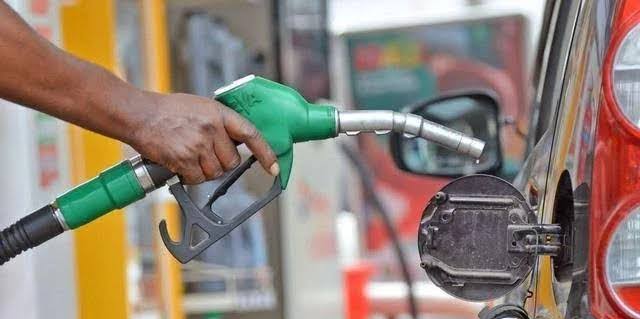
The Federal Competition and Consumer Protection Commission (FCCPC), led by its Executive Vice Chairman and Chief Executive Officer, Mr Tunji Bello, on Tuesday, 10 November 2026, announced intensified monitoring of petroleum prices in Nigeria, urging refiners and marketers to reflect declining international crude oil costs in the prices Nigerians pay at filling stations.
The commission’s announcement comes amid a fresh decline in global crude prices, raising expectations that motorists and businesses could begin to experience some relief from the high cost of petrol and diesel.
In a statement issued by the FCCPC’s Director of Corporate Affairs, Ondaje Ijagwu, the commission said it was closely tracking developments in the international oil market and their potential implications for domestic fuel prices.
The intervention follows reports that Brent crude futures, which had climbed to approximately $115 per barrel in September, have fallen below $90 in recent trading.
The decline represents a significant movement in the international oil market after months of volatility associated with the conflict involving the United States, Israel and Iran, which disrupted energy supplies and shipping activities around the Strait of Hormuz.
According to the FCCPC’s latest statement, petrol prices currently average between ₦1,405 and ₦1,420 per litre in Abuja, while consumers in Lagos pay between ₦1,325 and ₦1,370 per litre.
These figures highlight the continuing pressure on Nigerian households and businesses, despite the recent easing of international crude prices. Other market checks have also recorded lower prices at selected outlets, demonstrating the differences between retailers and locations.
The commission noted that on 27 February 2026, a day before the conflict began, Brent crude futures closed at $72.48 per barrel, while petrol sold for between ₦839 and ₦925 per litre in Lagos and Abuja.
The subsequent increase in international crude prices contributed to higher domestic petroleum costs, with marketers frequently pointing to the disruption of global supply chains and uncertainty surrounding crude shipments.
The Strait of Hormuz, a critical shipping corridor connecting the Persian Gulf with international markets, has been particularly important to the crisis. The waterway traditionally carries approximately one-fifth of global petroleum liquids consumption, making disruptions a significant concern for international energy markets.
Reacting to the latest decline, Bello said the commission expected lower crude prices to translate into reduced wholesale costs and, ultimately, more affordable petroleum products for consumers.
“If the decline in crude prices is sustained, there is no justification for refiners and marketers to continue to keep petrol and diesel prices relatively high. We expect easing in wholesale petrol costs and for the resulting savings to reach consumers at the pump without undue delay,” Bello said.
He acknowledged the financial difficulties Nigerians have faced following successive increases in fuel prices, stressing that the commission would continue to monitor developments across the downstream petroleum market.
“We are aware of the difficulties high pump prices have caused Nigerians for some time now. Let me reassure that the Commission will continue to work with the Nigerian Midstream and Downstream Petroleum Regulatory Authority and other relevant government agencies to track wholesale and retail petrol prices,” he added.
Bello also warned that the commission would not hesitate to act where evidence establishes anti-competitive conduct or unfair commercial practices preventing consumers from benefiting from lower operating costs.
The FCCPC’s intervention comes against the background of Nigeria’s deregulated downstream petroleum market, where prices are influenced by international crude costs, foreign exchange movements, refining expenses, transportation, financing and distribution charges.
Although the commission does not directly determine or approve petrol prices, it has statutory responsibilities under the Federal Competition and Consumer Protection Act 2018 to promote competition and protect consumers against unfair market practices.
In June 2026, the FCCPC raised similar concerns after its surveillance of the downstream petroleum market suggested that reductions in refinery gantry and retail prices were not proportionate to the decline in international crude prices.
At the time, Bello emphasised that market liberalisation should not become an excuse for practices that disadvantage consumers. He maintained that businesses operating in a deregulated environment still had an obligation to compete fairly.
The latest announcement therefore represents a continuation of the commission’s efforts to ensure that movements in international energy markets are reflected more transparently in domestic petroleum pricing.
Meanwhile, recent market developments suggest that some reductions are already emerging. Brent crude settled at $92.57 per barrel on 9 November, while NNPC retail stations were reported to have reduced prices to approximately ₦1,340 per litre in Lagos and ₦1,325 in Abuja.
However, the reductions have not been uniform across the country. Reports from other locations indicate that several filling stations continue to charge considerably higher prices, underlining the uneven transmission of lower wholesale and import costs to consumers.
Industry operators have also maintained that crude prices alone do not determine the final cost of petrol. Refining expenses, exchange-rate movements, product procurement costs and transportation remain important considerations in the pricing process.
This distinction is particularly relevant in Nigeria, where locally refined and imported petroleum products operate within a market influenced by changing international and domestic commercial conditions.
The FCCPC’s position is that these cost considerations should not shield operators from scrutiny where there is credible evidence of price manipulation, collusion, abuse of market dominance or other practices that undermine competition.
As the commission works with the Nigerian Midstream and Downstream Petroleum Regulatory Authority and other relevant agencies, attention will increasingly focus on whether the latest decline in crude prices produces meaningful reductions across the petroleum supply chain.
For millions of Nigerians who depend on petrol for transportation, electricity generation and business operations, the prospect of lower fuel prices carries significant economic importance.
The challenge now is ensuring that the benefits of falling international crude prices move beyond the wholesale market and reach consumers at filling stations without unnecessary delays.