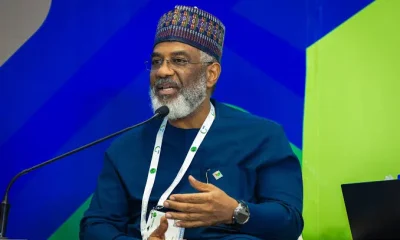
Emmanuel Orekoya court ruling dismissed as judge blasts prosecution’s failure to present witnesses in alleged sexual assault case involving his teenage daughter
In a dramatic turn of events, Justice Abiola Soladoye of the Ikeja Sexual Offences and Domestic Violence Court on Wednesday dismissed the charges against Redeemed Christian Church of God pastor, Emmanuel Orekoya, who was accused of sexually assaulting his 17-year-old daughter.
The Emmanuel Orekoya court ruling has drawn emotional reactions and renewed scrutiny over the Lagos State prosecution’s handling of sensitive cases.
Orekoya faced a two-count charge of defilement and sexual assault by penetration, stemming from allegations that in 2017, he inserted his penis into the mouth of his daughter at their home in Surulere, Lagos. He pleaded not guilty to the charges during his arraignment on 26 February 2024.
However, Justice Soladoye ruled on Wednesday that the case could no longer continue due to the prosecution’s consistent failure to present any witnesses.
Since Orekoya’s arraignment, the court had granted 10 adjournments. On each occasion, the prosecution failed to produce even a single witness.
“This case has become a colossal waste of time. Justice delayed is justice denied,” the visibly frustrated judge stated. Her remarks captured the sentiments of many who were following the case, especially advocates for sexual abuse survivors.
The judge lamented the lack of diligence from the state’s legal team. “Since the defendant’s arraignment, there have been 10 adjournments, yet no witness has appeared to testify,” she said, adding that the court could not afford to continue indefinitely without any progress.
Observers in the courtroom noted the judge’s tone of disappointment as she announced her decision. For many, the Emmanuel Orekoya court ruling now represents a serious indictment of the system meant to protect vulnerable victims, particularly in cases of alleged sexual abuse.
Despite dismissing the charges, Justice Soladoye did not completely close the door on legal action. She made it clear that the prosecution retains the right to bring the defendant back to court if and when they are prepared to proceed with the case properly.
“Prosecution is at liberty to re-arrest the defendant and bring him to justice whenever they have assembled their witnesses to prosecute this case,” she concluded.
Legal analysts say this clause allows the case to be revived in the future, but the damage to public confidence may already be done. The court’s ruling does not exonerate Orekoya in substance, but it places a spotlight on the failure of the legal process to function efficiently when victims and their families need it most.
The Emmanuel Orekoya court ruling also raises broader questions about the challenges facing Nigeria’s justice system in handling sexual offences.
According to reports, many such cases are either abandoned, delayed beyond reason, or lost due to poor preparation by prosecuting teams.
A women’s rights advocate who spoke anonymously said, “The system often retraumatises victims by keeping them in limbo. This ruling feels like justice wasn’t even attempted.”
The incident allegedly occurred in 2017 on Jacob Adeleye Street, Odoeran, Itire, Surulere, Lagos. It was not until years later that the charges were officially filed, highlighting another delay that may have undermined the case’s integrity from the outset.
Pastor Orekoya, for now, walks free, though under the shadow of unresolved allegations. While he has consistently denied any wrongdoing, the absence of a trial means that the truth of the matter remains legally untested.
As Lagos and other Nigerian states push for reforms in the prosecution of sexual offences, this ruling could become a case study on how not to handle sensitive legal matters.
Whether the prosecution will act on the judge’s invitation to reassemble their case remains to be seen. For now, the justice system owes the public, and particularly the alleged victim, a better showing.