








A Nation in Darkness Cannot Industrialise

By Ehi Braimah
Nigeria’s ambition to become a major industrial economy will remain difficult to achieve for as long as electricity supply is unreliable, expensive and inaccessible to a significant proportion of the population.
No country can sustainably industrialise when manufacturers spend scarce capital generating their own electricity, households depend heavily on generators and businesses cannot predict how many hours of power they will receive daily.
Electricity is more than an infrastructure requirement; it is the foundation upon which modern economies are built. It drives manufacturing, supports technological innovation, improves productivity, creates employment and makes businesses competitive. Without reliable power, industrialisation becomes an expensive aspiration, making it difficult for Nigeria to achieve its economic objectives.
This is why the country’s electricity crisis must be examined beyond the inconvenience of household blackouts and the frustrations of consumers. It is fundamentally an economic emergency with serious implications for Nigeria’s industrial future.
In the first instalment of this conversation, I examined the persistent electricity crisis, the failure of successive governments to deliver reliable power and the frustration of consumers, including residents of Ikeja GRA in Lagos, who pay for electricity but endure prolonged outages.
This second instalment focuses on the implications for manufacturing, private investment and Nigeria’s capacity to compete in an increasingly industrialised global economy.
The warnings from business leaders and organised manufacturers should not be ignored.
Manufacturers are paying twice for electricity
Perhaps nowhere is the economic cost of Nigeria’s electricity crisis more evident than in the manufacturing sector. Manufacturers are expected to compete with counterparts in countries where electricity is relatively affordable and consistently available. Nigerian manufacturers, however, operate under conditions that place them at a considerable disadvantage.
According to figures presented by the Manufacturers Association of Nigeria (MAN), manufacturers spent approximately ₦1.35 trillion on alternative energy in 2025, compared with ₦1.11 trillion in 2024. This represents an increase of about 21.6 per cent.
Think about the implications of this expenditure. More than ₦1.3 trillion was committed to keeping factories running because the national electricity system could not adequately meet their energy requirements.
This is capital diverted from productive investment. Instead of acquiring modern machinery, expanding production lines, improving product quality, investing in research and development or employing additional workers, manufacturers are forced to allocate substantial resources to diesel, gas, generators, inverters and other alternative energy systems.
MAN’s Director-General, Segun Ajayi-Kadir, has repeatedly warned about the heavy burden of energy costs on manufacturers. The association has identified unreliable grid supply, high tariffs and dependence on alternative power as major constraints on industrial productivity and competitiveness.
The consequences are predictable: higher prices, reduced profit margins, lower capacity utilisation, delayed investments and, in some cases, factory closures.
Consumers ultimately bear part of the burden through higher prices for locally manufactured products.
At the 2026 Manufacturers Energy Security and Energy Efficiency Summit in Lagos, MAN raised concerns about high electricity tariffs, unreliable grid supply and the growing cost of self-generation. Its representatives called for practical solutions involving renewable energy, battery storage, captive power and improved electricity distribution.
The message is clear: manufacturers cannot continue to shoulder the cost of providing electricity that should be available through a functional power system.
Tony Elumelu’s warning: Electricity is the foundation of economic transformation
Tony Elumelu, chairman of Heirs Holdings and Transcorp Group, has consistently drawn attention to the relationship between reliable electricity and economic growth.
In April 2025, he warned that Nigeria’s ambition of building a $1 trillion economy could not be realised without urgently fixing the power sector. He described access to electricity as a critical factor in transforming the Nigerian economy, particularly as the country seeks to expand the contribution of the non-oil sector.
His intervention is significant because it comes from an investor with substantial experience in Nigeria’s power industry through Transcorp Power, which operates the Ughelli and Afam power plants.
Elumelu has also drawn attention to the financial difficulties confronting electricity generation companies. At Transcorp’s 2025 annual general meeting, he disclosed that the Federal Government owed the company more than ₦600 billion for electricity supplied to the national grid.
His argument was that private investors cannot indefinitely finance a sector in which payments for services rendered remain outstanding.
This is an important dimension of the electricity crisis. Nigeria cannot attract the investment required to expand generation capacity if investors lack confidence that their investments will generate sustainable returns.
More recently, at the Wole Olanipekun Justice Summit in Abuja in November 2026, Elumelu again connected private-sector investment to reliable institutions and predictable government policies. He argued that investors need confidence that contracts will be respected and regulatory commitments honoured.
He also stressed that a transparent power sector would become more attractive to investors, drawing the capital required to light homes, power factories and support hospitals, schools and universities.
The lesson is straightforward: electricity reform requires a credible investment environment, financial discipline, regulatory consistency and respect for contractual obligations, in addition to building power plants.
Government cannot expect private investors to commit billions of dollars to infrastructure while leaving them uncertain about payment arrangements, tariff structures and the rules governing their investments.
Dangote’s $10bn signal: A major opportunity
Perhaps one of the most consequential recent interventions has come from Aliko Dangote, Africa’s foremost industrialist, whose proposed investment of more than $10 billion in the power sector deserves serious attention.
In an interview with Al Jazeera in September 2026, Dangote disclosed that his group was considering redirecting funds from one or two businesses it might abandon, including a proposed steel venture, into power investments.
His stated ambition is to invest more than $10 billion in Africa’s power sector over the next three to four years.
The announcement should be understood in its proper context: it is an Africa-wide investment ambition, not a confirmed $10 billion commitment exclusively to Nigeria. Nevertheless, given Dangote’s industrial footprint and the scale of his existing investments in Nigeria, the announcement presents an opportunity for the country to attract a substantial share of the proposed capital.
Dangote’s argument is compelling.
Africa cannot achieve sustainable economic growth while hundreds of millions of people remain without access to electricity. He believes that electricity is indispensable to industrialisation, job creation and the continent’s economic transformation.
His words deserve attention: “We will never, ever create growth without power.”
Dangote Refinery: An industrial giant that cannot afford to depend on the national grid
There is an important lesson in how Dangote has approached electricity supply for his biggest industrial investment.
The Dangote Petroleum Refinery operates a dedicated captive power plant with an installed capacity of approximately 570 megawatts. The facility is designed to provide the electricity required for the refinery and its associated petrochemical operations.
This is a deliberate investment in energy security, reflecting the understanding that an industrial facility of this magnitude cannot afford interruptions in electricity supply.
The decision is instructive. If one of Africa’s largest industrial investments in Nigeria requires dedicated power infrastructure to guarantee reliable operations, what does that say about the challenges confronting the country’s electricity sector?
Dangote has demonstrated what serious industrial investors must consider when public infrastructure cannot guarantee the reliability their businesses require.
This is why his proposed intervention in the wider power sector is particularly significant. His experience as an industrialist has given him firsthand appreciation of the relationship between electricity and productivity. The challenge now is to translate that experience into investments that can benefit other businesses and households.
Nigeria needs a power sector capable of supporting industries without compelling every major investor to build an independent electricity system. The national grid should be an economic asset, not a liability that industrialists must spend billions of naira trying to avoid.
The Federal Government and state governments should engage Dangote constructively and establish a framework that allows credible private investment to complement existing electricity infrastructure.
This should not become another investment announcement that generates headlines without translating into actual megawatts delivered to consumers.
I am surprised that Lagos and Ogun states, two major industrial hubs, have not done more to develop large-scale power solutions capable of supporting their industrial communities.
From investment announcements to industrial power
Nigeria needs to move beyond the habit of celebrating investment pledges. What matters is implementation, measurable outcomes and the ability to translate capital commitments into reliable electricity.
The Electricity Act 2023 provides an opportunity to restructure the sector by allowing states to establish and regulate electricity markets within their jurisdictions, subject to the relevant constitutional and regulatory provisions.
Several states can take advantage of this framework to develop independent generation and distribution arrangements suited to their economic needs.
Industrial clusters, manufacturing hubs and special economic zones should be prioritised in electricity planning. Manufacturers need dedicated and reliable power infrastructure that supports continuous production.
Government must also resolve the liquidity problems affecting the electricity market. Generation companies, gas suppliers and distribution companies need a financially sustainable environment in which legitimate obligations are honoured and investments can be recovered.
Meanwhile, renewable energy should become a central component of the national electricity strategy. Solar power, battery storage, mini-grids and embedded generation can provide additional capacity, particularly for industrial clusters and communities poorly served by the national grid.
MAN’s proposed Industrial Energy Cost Reduction and Adoption Programme is an example of the kind of practical intervention required.
By facilitating alternative energy solutions and financing arrangements for manufacturers, the initiative seeks to reduce the burden of upfront capital expenditure and improve competitiveness.
However, decentralised energy solutions must complement rather than replace the responsibility to strengthen the national grid.
Industrialisation requires affordable and dependable power
Nigeria’s industrial policy ambitions must be matched by corresponding investments in electricity infrastructure. It is difficult to understand how the country expects manufacturing to contribute a substantially larger share of gross domestic product when the cost of energy remains a major constraint.
The competition is global. Manufacturers in countries with reliable electricity enjoy advantages in production costs, product pricing, quality control and delivery schedules. Nigerian businesses cannot compete effectively when they must build private power systems to keep their factories operational.
The consequences extend beyond manufacturing. Agriculture requires electricity for irrigation, processing, storage and cold-chain logistics. Hospitals need uninterrupted electricity for diagnostic equipment and life-saving services. Schools and universities need power to support research, digital learning and technological innovation. The digital economy, artificial intelligence and data centres all depend on reliable energy.
A nation that cannot provide electricity consistently will struggle to develop these sectors at the scale required to create prosperity.
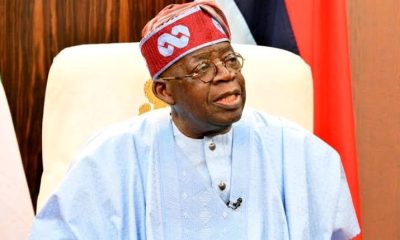
President Bola Tinubu’s administration should therefore treat electricity reform as a central pillar of its economic transformation agenda. The Minister of Power, Joseph Olasunkanmi Tegbe, has an opportunity to establish measurable targets, enforce accountability and create the conditions for investment across the entire electricity value chain.
Dangote’s proposed $10 billion investment ambition and Elumelu’s persistent advocacy for power-sector reform should serve as catalysts for a broader national conversation about the future of electricity in Nigeria. MAN’s concerns also provide a practical reminder of what inadequate power is costing the productive economy.
The objective should not be to generate electricity merely to improve statistics, but to deliver dependable and affordable power to households, factories, commercial establishments and public institutions.
Nigeria cannot create millions of sustainable jobs while manufacturers spend their capital generating electricity. Nor can it become a competitive economy when businesses must factor unreliable power into every investment decision.
The country has the resources, entrepreneurial talent, private capital and institutional framework to make progress. What is required is the political will to address the challenges and a coordinated commitment to implementation.
Let me remind President Bola Ahmed Tinubu that without industrialisation, the promise of shared prosperity will remain unfulfilled.